

Overview
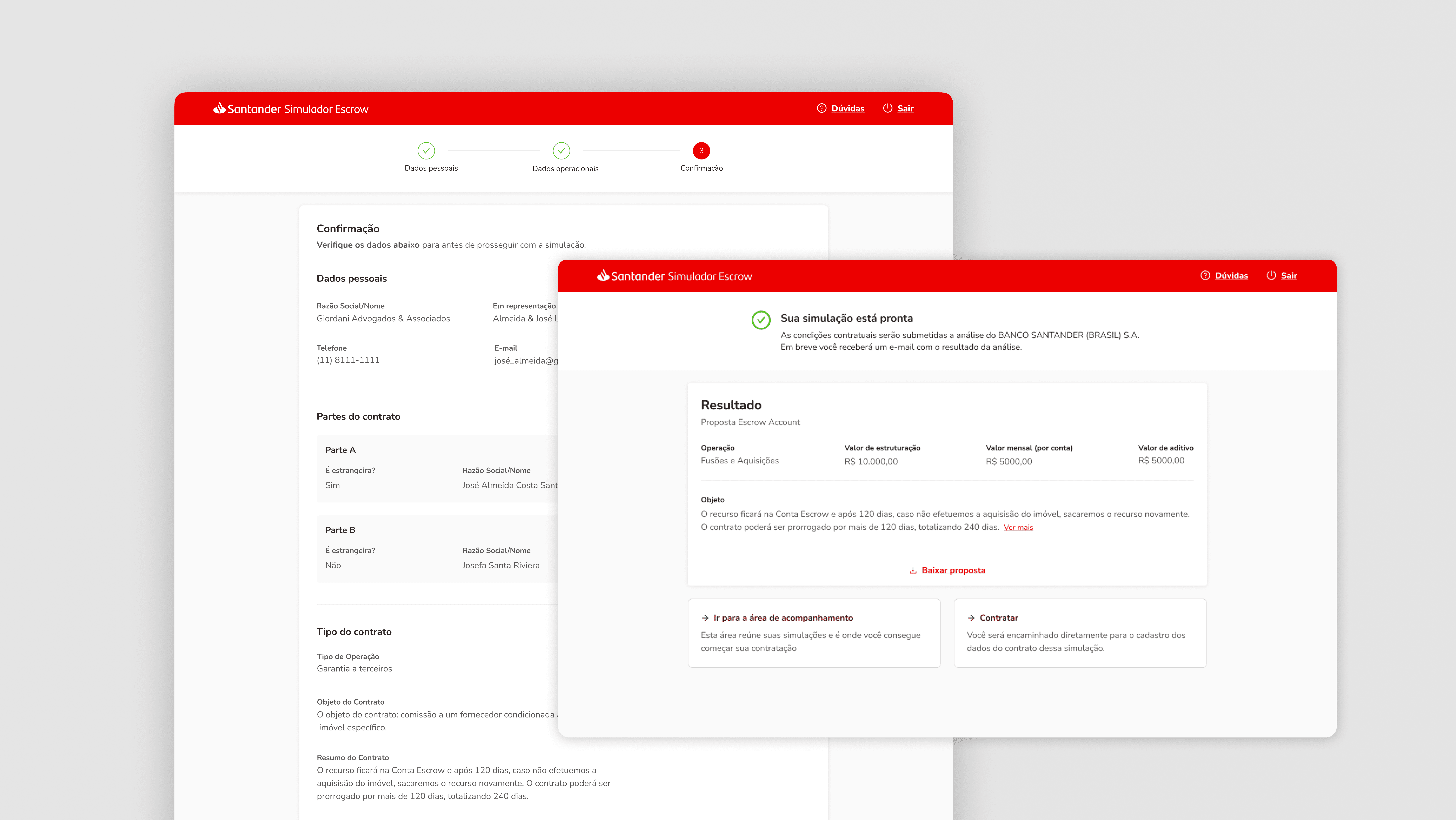
The Escrow Account web platform, designed for Santander S.A.'s multinational operations in Brazil, simplifies contract management and negotiations for businesses. Leveraging Santander S.A.'s global financial expertise, this platform empowers users to invest, manage, and monitor their contracts efficiently.
The Challenge & Goals
The manual process of budgeting Escrow accounts consumes significant employee time, leading to a less technologically advanced and agile hiring journey compared to other products Santander offers its customers.
Optimized Time Efficiency
Maximizing operational efficiency is crucial for sustained success.
Data Migration and Integration
Migrate data from the existing spreadsheets to the new web application. Ensure proper integration to maintain historical records.
Accuracy and Error Prevention
Automate calculations, minimizing the risk of errors associated with manual data entry in spreadsheets.
The solution
A platform responsible to 100% to entry point of new potential customers, streamlining the simulation and contracting process and eliminating 100% of manual processes associated with account simulation and contracting — a smooth flow to an old process.

Simplified Contract Services
No more spreadsheets and outdated processes.
Entry point of new clients 100%
Simulate and open the service at the same flow. Completing the entire journey.
User Autonomy
Given users control of their actions – sense of autonomy
Miller's Law
Reduced Cognitive Load. Avoiding churn rate.
Discovery
Understanding the problem
My main focus was to understand the context, user needs, and the business to determine the significance of this solution for the company at that moment and how it would benefit the user.
We conducted user interviews, engaging in 1:1 sessions with 5 members of each team. Below are the valuable insights and feedback shared from their experiences, needs, and preferences.
These are the findings regarding the main problems:
Bankers & Backoffice
Dependency of their managers on pricing a new account.
Generating contracts is a lengthy and exhaustive process.
If account details are misunderstood, client need to be reach out again, causing delays.
Users
Back-and-forth emails are needed to exchange information.
Lack of understanding regarding information requested from clients.
Waiting too long to receive account pricing.
Empathy
User Flow
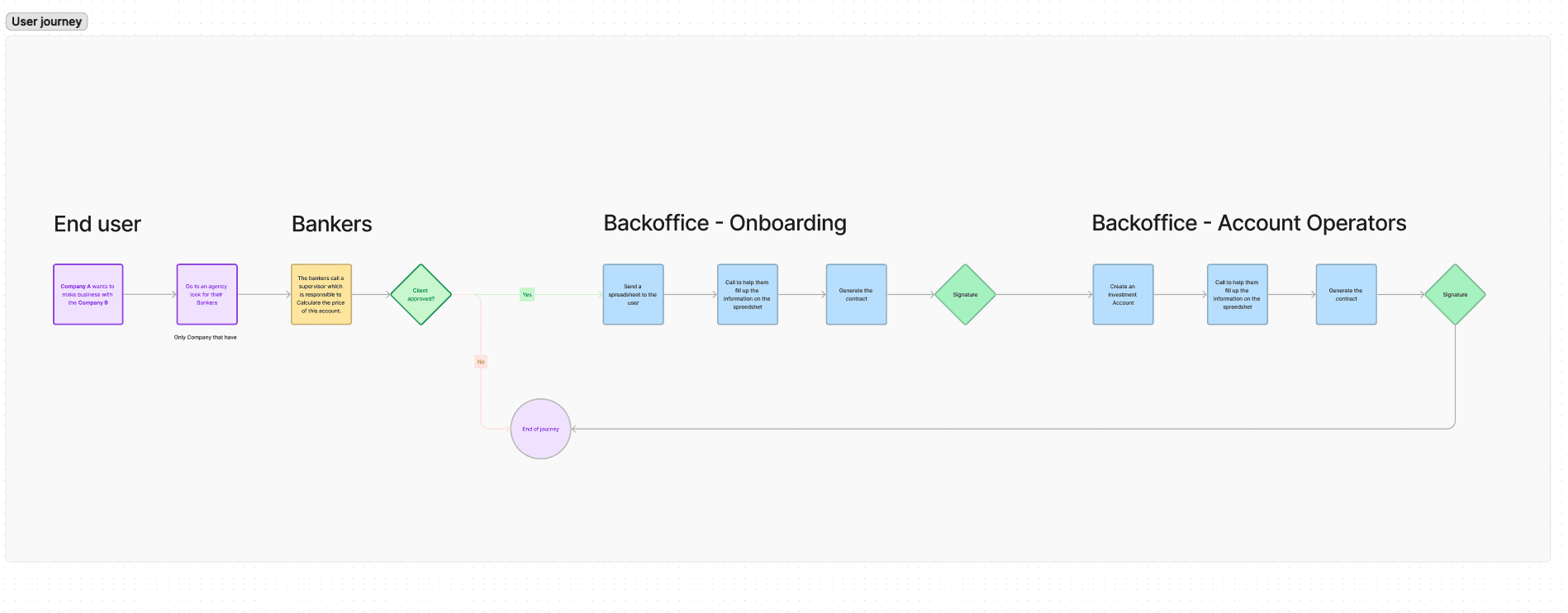
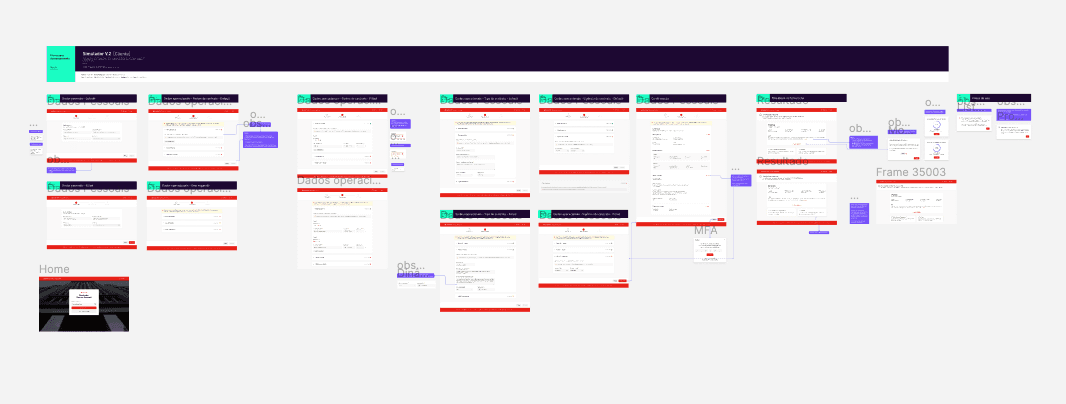
I mapped the entire flow, working closely with stakeholders to understand unfamiliar terminology and document the discovery process.
Benchmark
Ideation
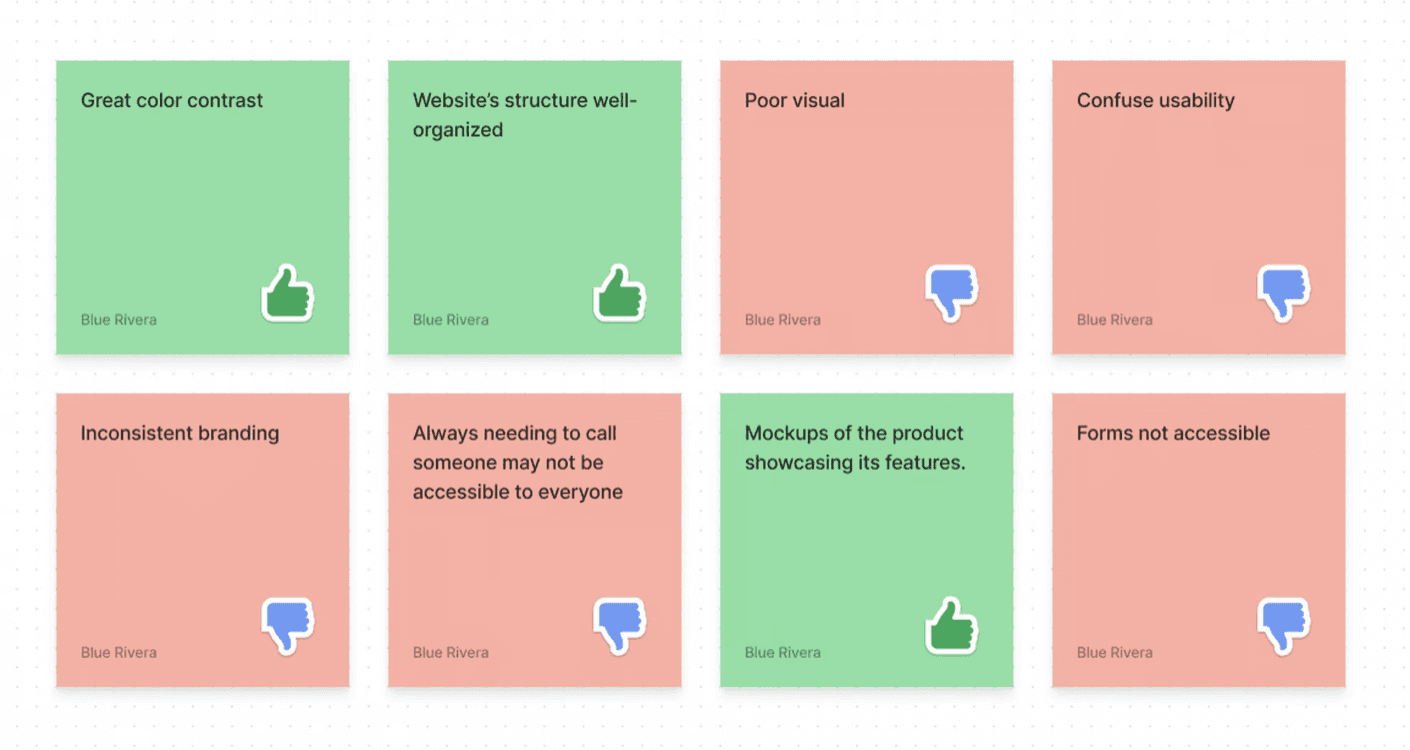
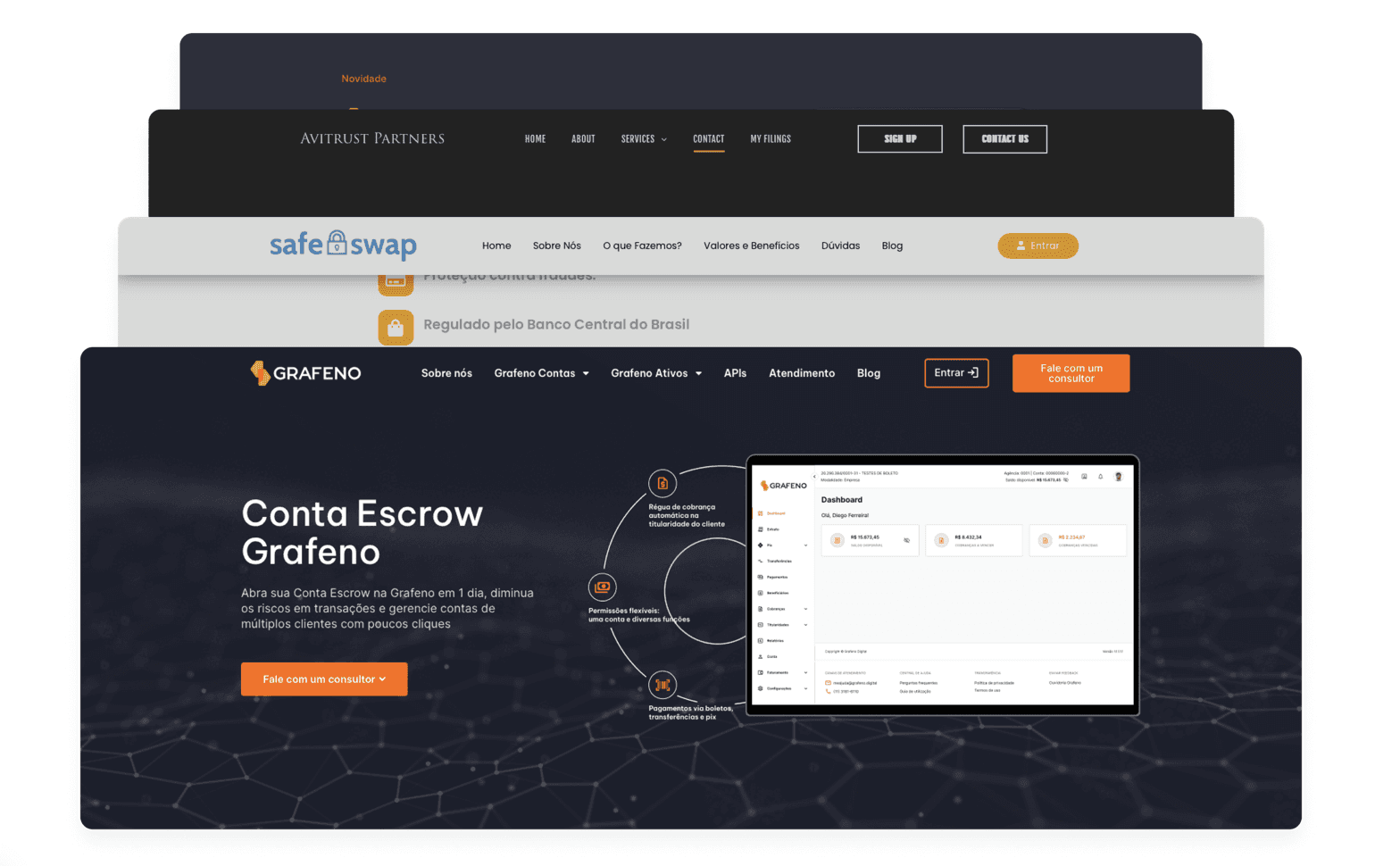
After identifying the biggest pain point, it was time to examine the market—how competitors are addressing the problem, how they’re solving it, and what they promise users.
To evaluate competitors’ experiences, I focused on the following points:
Experience & Usability
Tone of Voice
Branding
Visual design
Photography
Benchmark
Information Architecture
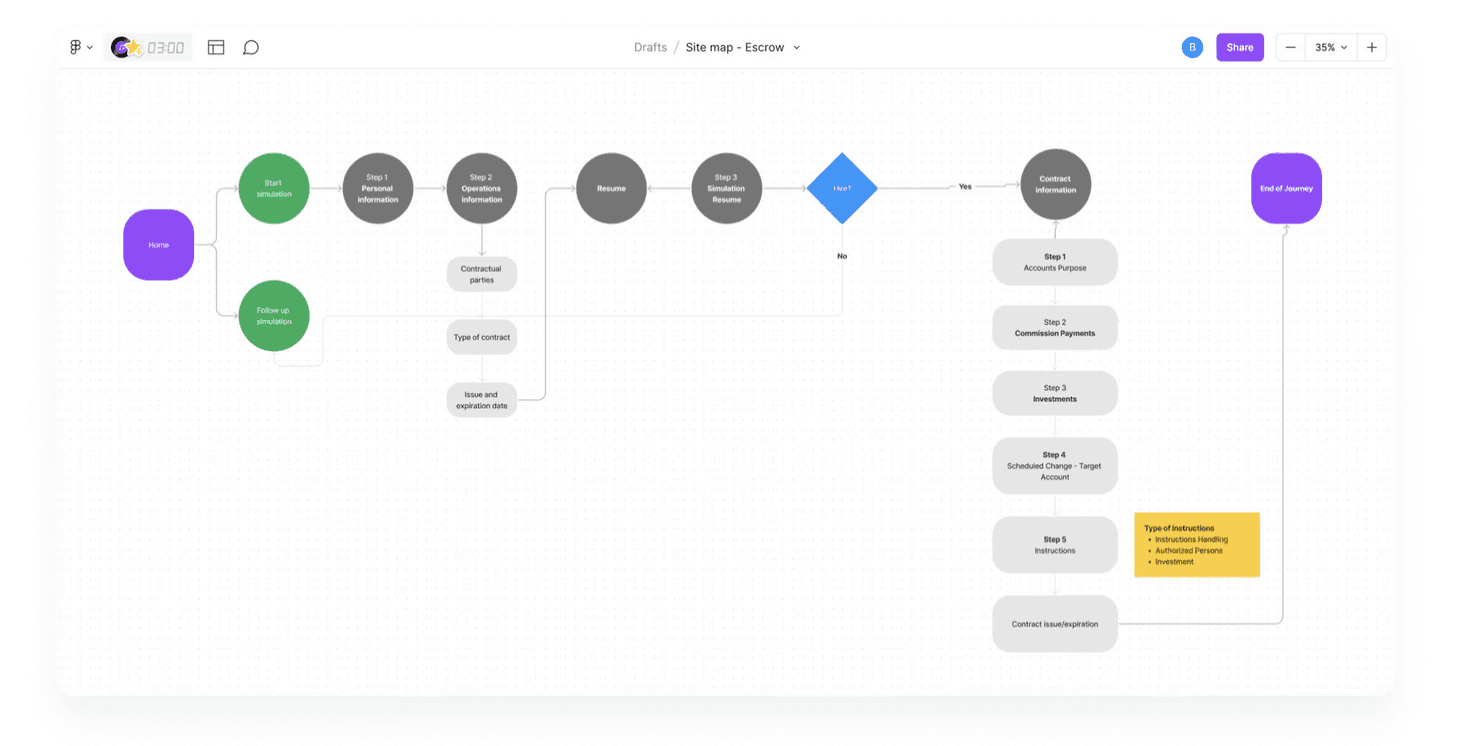
It’s time to organize my ideas, create a solid structure, and a Sitemap to guide my wireframes, giving me insights to build the platform.
Hands on
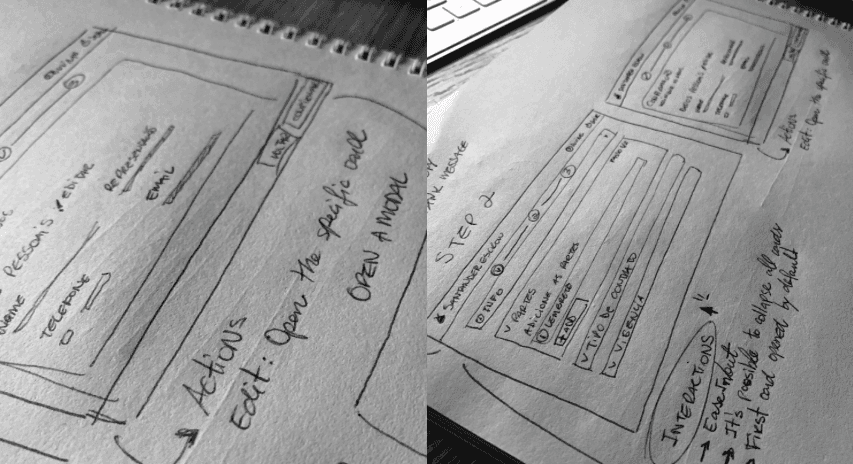
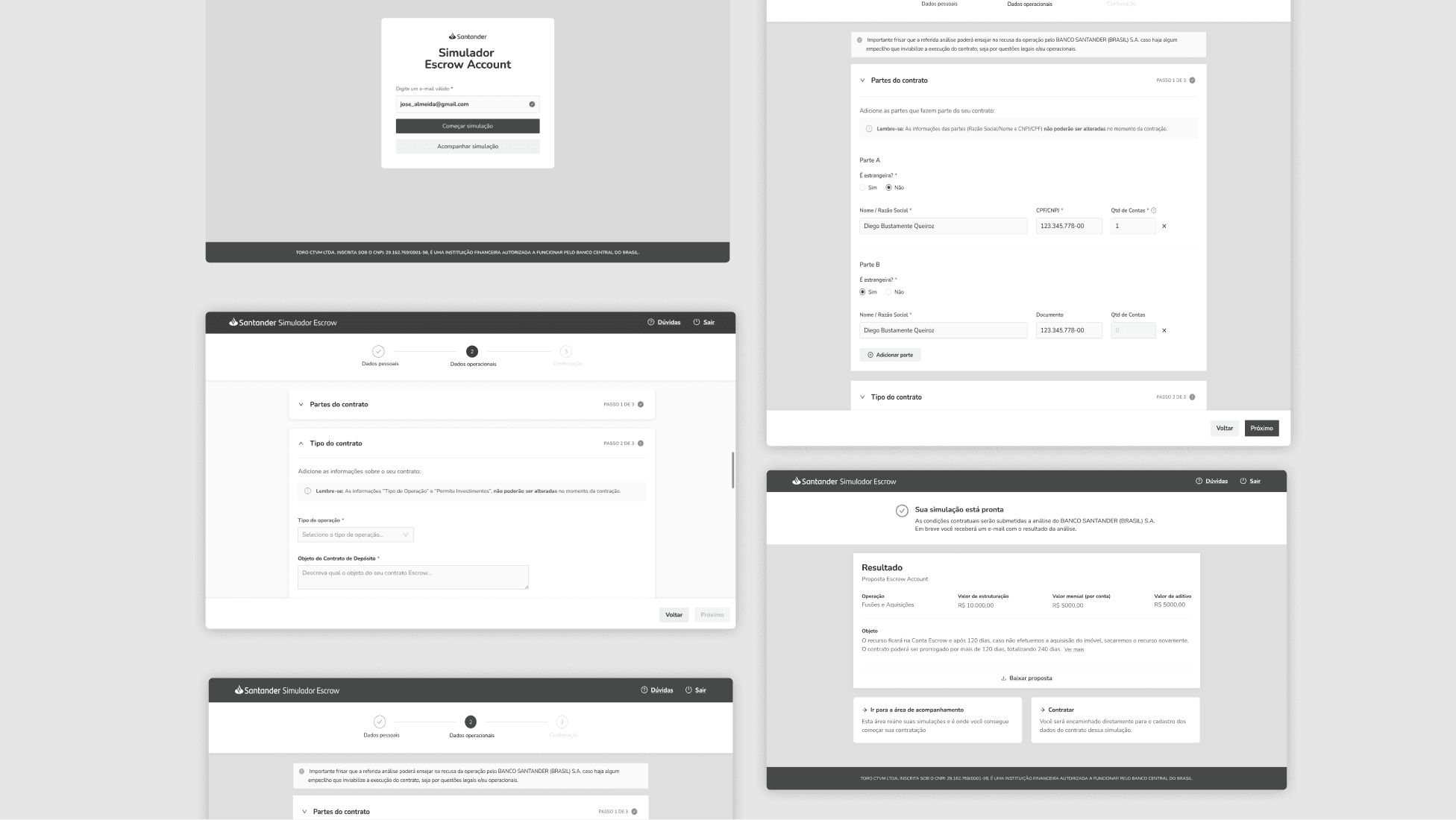
Sketches & Wireframes
It’s time to organize my ideas, create a solid structure, and a Sitemap to guide my wireframes, giving me insights to build the platform.
Delivery
Visual + Handoff
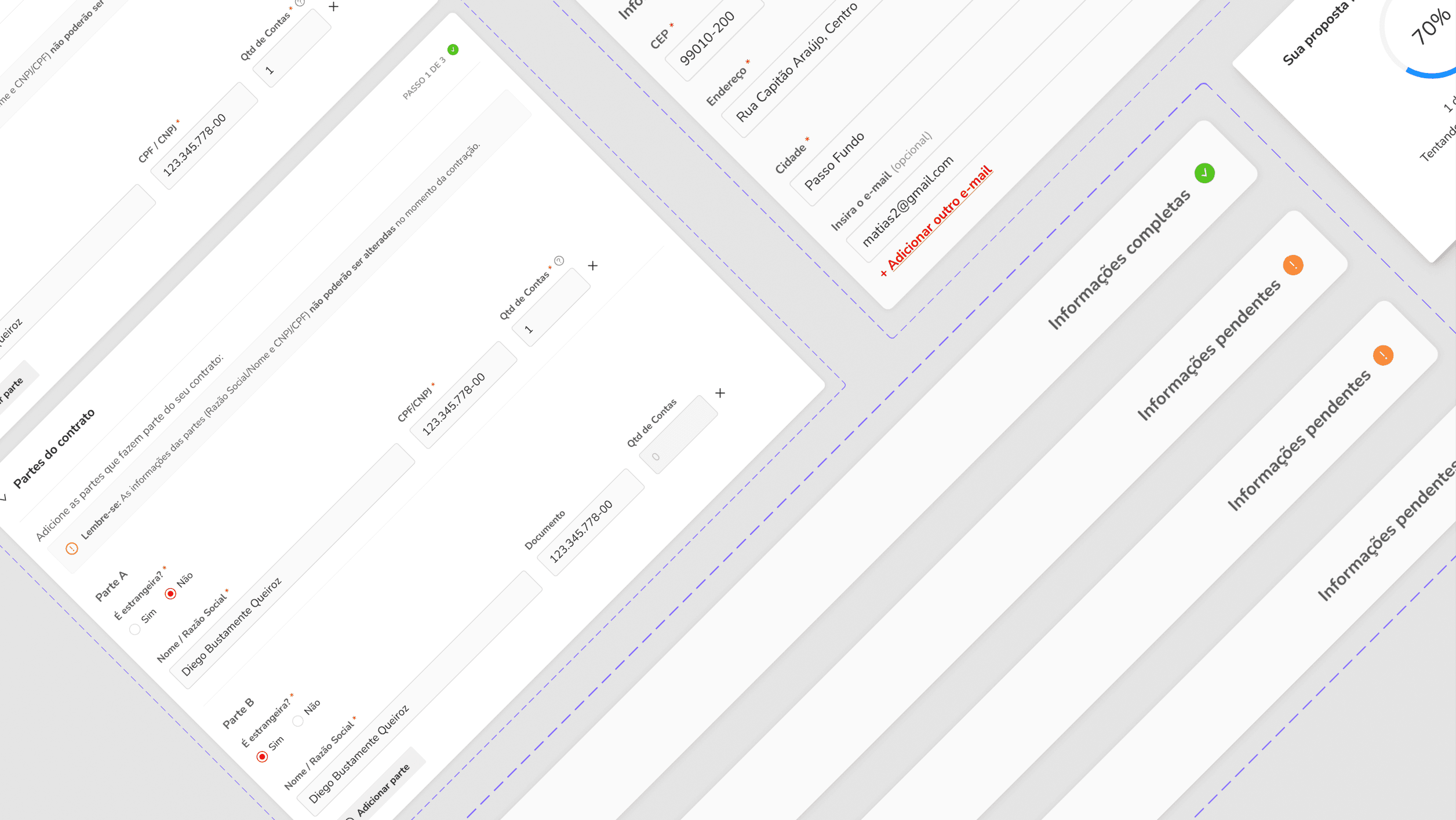
Two-step-verification
Additional layer of protection, preventing the unauthorized use of emails for generating undesired proposals.
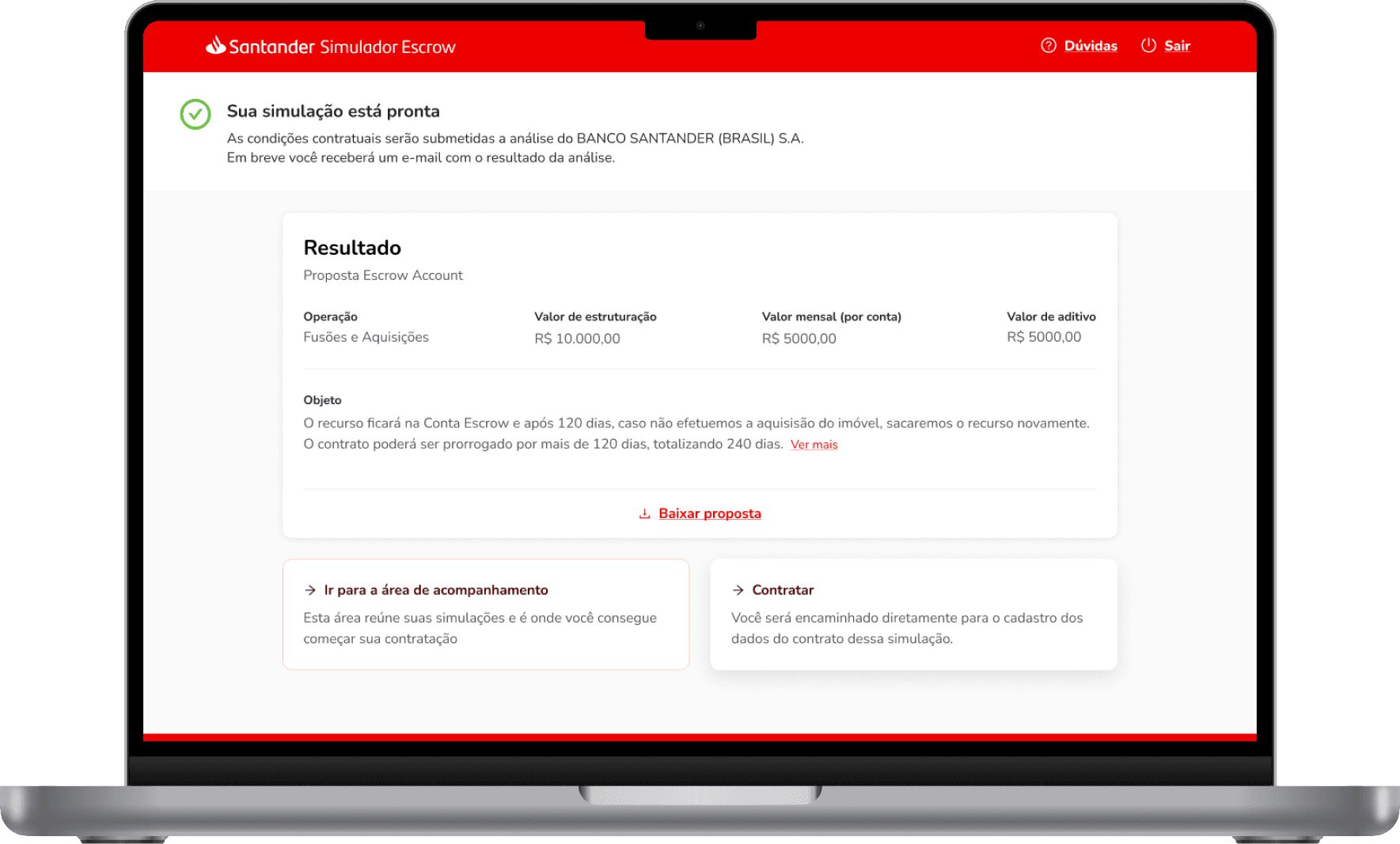
Immediate Simulation Results
Users can now swiftly access simulation outcomes, streamlining the process and opening doors for both businesses and users to explore new opportunities.
Lessons learned
Don't reinvent the wheel
Sometimes things may seem clear, but they might not be as you thought. Ask and question your team to ensure clarity about what you need.
Break everything into small pieces and document it
Gather all the information you have and organize it in a way that ensures a comprehensive understanding. (I used FigJam, and it helped me a lot).